My first attempt at YouTube video/tutorial thing. Gonna try to get one of these done a week…
U is for Unity
If you want to make games, Unity is a tool you should look at. It allows you to easily create games (both 3D and 2D) for a variety of platforms including Windows, Linux, Mac , Web , iOS, Android and Windows Phone. It also has a free version and if you ever need the pro version it is reasonable cheap to buy or subscribe to.
Check out some of the features in the upcoming version:

Here are some links to get you going:
- Unity download page
- Unity Asset Store – great place to find add ons and game assets such as art and music
- Tutorial: Creating your first Unity Android App – my tutorial
- Intro to Programming with Unity3D – a good set of video tutorials for those with little or no programming expirence
- Unity learning center – heaps of tutorials and access to documentation
Go Nuts and build the next Flappy bird!
V is for Velocity
Physics based games, especially on mobile devices have become de rigueur. It’s pretty amazing what can be done with some simply math.
I recently came across this game mechanics site which provides short examples of different game mechanics, algorithms and effects. Many of these are of course physics based and involve velocity.
Some of my favorites:
Yay for maths and physics!
W is for White Rabbit
I’m late, I’m late , I’m Late…
with this blog post :(
T is for Taxes (and delayed blog posts)
Been working on my taxes so have been a bit slack in posting…
However I thought that I would share this graph which shows where all your tax money was planned to go for 2013⁄2014 (if you are New Zealander that is):

Source http://www.interest.co.nz/news/64515/budget-2013-summary-all-spending-plans
Pretty much what you’d expect, Social Welfare: 27%, Health: 17.7%, Education: 15.3% which is the price you “pay” for free education, healthcare and a good social welfare program. Then the shocker 13.9% ( $11,502.8 million) paying back debt! Thanks economic crisis :( More details here
S is for Strange conversations
I use public transport religiously. It means we are a one car family which saves a bucket of money and helps out the environment to boot. Even better I get to walk about 40 minutes a day which helps with the waistline!
But there is an added “bonus” and that is: strange conversations with strangers.
Over the years I have had some seriously good ones, point in case, two days ago I was walking alongside an elderly polynesian man…
“Nice day” he said.
“Yep”, I said fumbling with my earbuds so I could hear what he had to say.
“You going home? Had a long day?” he asked
“Yep, on the I’m on my way home” I said.
“Good, good” he mused. “Maybe have a whisky to relax?” he puzzled.
“Maybe a bourbon” I volunteered…
“Get a massage?” he said with a grin.
What? I thought to myself…
“You should get yourself a Chinese Lady” he announced. ”Not a fat one; a nice skinny one” he continued.
“Ahhhhh????” I muttered trying to wrap my head around where this conversation was going.
We walked on for a few moments and then he asked “You married?”
“Yes” I said non-committedly, my brain still wrestling with his comment about Chinese Ladies.
“Mmmm….” he mused, “Sorry”. Then our paths diverged him going left and me going right.
Perhaps my favourite stranger conversion was with an elderly lady on a bus a few years ago. As I sat down across from her, she leaned forward and said “You remind me of an Italian Duke I once knew”. Oh boy, I thought, here we go again.
It turns out that she was a bit wayward as a young girl and left the farm to see the world (much to her parents horror). Somehow she landed up as the Au Pair for a widowed Italian Duke and then worked her wiles to become his consort. Apparently their relationship caused much scandal and anguish amongst the local nobility, especially the Duchesses. She even pulled out a faded photo of herself when she was young, I must say she was quite the looker and I suspect with her looks and strong personality the poor Duke never stood a chance. Unfortunately the bus arrived at her stop before I could find out more.
So the next time you decide to drive somewhere, perhaps take the bus or train instead. You never know what interesting conversations you might have :)
Q is for ???
Well, I was going to blog about Quaternions and how Unity really makes it easy to do 3D stuff without you having to have a deep understanding of math but I ran out of time!
So instead here are a list of things starting with Q that I had no idea existed…
Quassin
Quassin is a white bitter, crystalline substance extracted from the quassia tree. It is one of the most bitter substances found in nature with a bitter threshold of 0.08 ppm and it is 50 times more bitter than quinine.
Qintar
A monetary unit of Albania, equal to one hundredth of a lek.
Quint
Has several meanings including: a sequence of five cards of the same suit. A run of ace, king, queen, jack, and ten is a quint major and one of jack, ten, nine, eight, and seven a quint minor.
Qoph
The 19th letter of the Hebrew alphabet.
Quokka
The quokka, the only member of the genus Setonix, is a small macropod about the size of a domestic cat. Like other marsupials in the macropod family, the quokka is herbivorous and mainly nocturnal.
Quiddity
An evasion of the point of an argument by raising irrelevant distinctions or objections or The essence that makes something the kind of thing it is and makes it different from any other
Quidnunc
A person who meddles in the affairs of others.
R is for Role Playing Games
Traylix waited, he wasn’t nervous but he was pretty sure that something was about to go wrong; it always did. He glanced over to the prince and the two marines standing further down the alley. They all wore long, shapeless cloaks with the hoods up, as did he. Hopefully this subterfuge would deprive any would-be assassins an obvious target.
From up the street Traylix heard the sound of a horse and cart and out of the darkness came two more cloaked figures, Datura and Winnowen. Behind them was a third figure leading a horse which pulled a cart loaded with barrels.
As they drew level Traylix asked quietly “The gold?”. “In the barrels” answered Datura excitedly.
The figure by the cart reached back, put on the cart’s brake and the stepped forward in a pool of light.
He was a noble looking man and he dropped to one knee, bowing in front of the marines and the prince. “My liege, it is so humbling to finally meet you” he said. The prince stepped forward and put out his signetted hand to be kissed. The noble leaned forward to kiss the prince’s hand and then suddenly leapt up, driving a concealed dagger into the prince’s chest. “The Emperor sends his regards!” the assassin spat as he savagely twisted and pulled the blade out of the prince’s falling body.
Traylix frantically backpedaled to buy himself time as the assassin turned and launched a flurry of blows. In the background Winnowen dragged the prince’s lifeless body out of the way and began casting his powerful healing magic in an attempt to save the prince.
Deadly bolts of magic launched from Datura’s fingers but seemed to wash harmlessly over the assassin. Finally Traylix was able to draw his weapons and counter attack. Boxed in by Traylix and the marines, the assassin tried to put up a fight but was quickly cut down.
Breathing heavily Traylix and the marines took up guard. He heard coughing and retching over his shoulder and turned to see Winnowen sitting the prince up. He looked awful but alive.
To his left Daturua cursed. Traylix looked over to see that she had been searching the body of the assassin and had uncovered a mark branded into his chest. The Mark of Torquemada… no wonder Datura’s magic was ineffective.
Traylix peered into the dark but there was no sign of any other attackers and the brief fight appeared not to have attracted anyone’s attention.
Well, thought Traylix, that didn’t go too badly… and that was when the gunpowder hidden in the barrels on the wagon exploded and all hell broke loose….
That was a scene from my role playing game last Thursday. Role playing games are kinda of difficult thing to explain to someone. Probably the best way to explain it is, that it is like improv theater but without the audience (other then the other players).
I have been playing pen and paper RPGs since I was a teenager but fell out of the hobby in my twenties. A few years ago I decided to try start gaming again and convinced some of my friends to give it a go. I was somewhat surprised how enthusiastically a bunch of mid-thirty year old professionals took to RPGing especially the girls (including my wife)!
So how does this thing work?
Well most pen and paper RPGs work as follows:
- One of the players takes on the job of the game master or story teller. It is their job to create the world and story in which the other players find themselves. It is the GM’s job to describe how the world reacts to what the players do. This is often the job I take on. It’s quite a bit of work but very rewarding.
- The other players each play a character in the story. It is their job to describe how their character reacts to the world around them. To guide them, each character has a defined set of strengths and weaknesses, skills, beliefs and personality quirks. These are all written down on a paper “character sheet”, hence the name: pen and paper RPGs. For instance Tralix is a Doreen (a kinda humanoid dolphin) he is a fantastic fighter and ship’s captain, but he has a loyalty quirk which means he often puts himself in danger to protect his crew and friends. Datura is a female Masaquani, she is somewhat obsessed with gold and suffers from extreme curiosity which gets her and her friends into lots of trouble. Lastly, Winnowen is Kraken (a humanoid squid) who is an powerful wind mage with a morbid fear of whales (it’s a long story).
- Some rules are followed – There are hundreds of RPG rulesets. These basically provide a framework for telling the story. Trying to hit someone with a sword? The rules cover how that works. Want to jump between two buildings? The rules cover that. Fail to jump between two buildings? The rules cover what happens when you fall from a great height. The ruleset my group is currently using is called Savage Worlds.
- Lots of strangely shaped dice are rolled. These are used to add randomness to the game. Typically you roll dice when your character is trying to perform some sort of feat. The results of the roll, modified by the character’s abilities (or lack thereof) determine if that feat succeeds or not and affects how the story unfolds.
- A setting is used. These provide a world for the game master to weave the story in. The setting we are currently playing in is called 50 fathoms. It is a fantasy pirate setting (think Pirates of the Carribean) where the world is slowly being flooded by a witches curse. Of course it is the player’s mission to stop them. Many game masters create their own settings (I suspect we all think we are Tolkien or something).
- Pizza is consumed and fun is had
As I said it’s pretty hard to explain and is really something you need to experience. But take my word for it, it is heaps of fun.
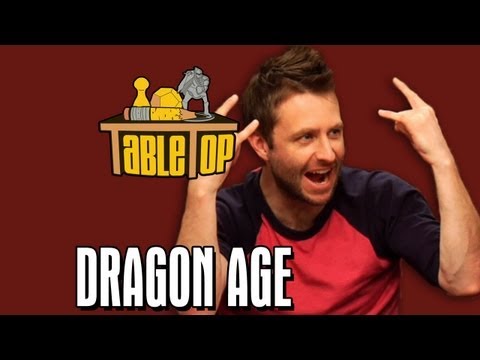
Here is a short clip of a RPG gaming session from the Tabletop gameshow, hopefully it will give you a better idea of what goes on. Although I must admit my gaming group is not nearly as focused but that is how we role… see what I did there :)
P is for Productivity in New Zealand
It costs 40c to produce every dollar in New Zealand which, is pretty astounding figure. A report released this week by the New Zealand Productivity Commission tries to determine why New Zealand’s GDP per capita is generating over 20% below the OECD average when (based on it’s broad policy settings) it should be generating 20% above the OECD average.
It identifies a number of causes:
The country has good resources – investment in physical capital and average years of schooling are broadly consistent with other countries. Employment of low-skilled workers also plays only a minor role in New Zealand’s poor (measured) productivity performance.
Instead, over half of New Zealand’s productivity gap relative to the OECD average can be explained by weaknesses in our international connections. New Zealand firms face reduced access to large markets and limited participation in global value chains, where the transfer of advanced technologies now often occurs.
Most of the rest of the gap reflects underinvestment in “knowledge-based capital”. In particular, R&D undertaken by the business sector is among the lowest in the OECD, reducing the capacity for “frontier innovation” and the ability of firms to absorb new ideas developed elsewhere (“technological catch-up”). The quality of management in New Zealand is also low, which lowers the productivity gains from new technology.
The paper also outlines ideas for addressing these problems. It’s a good read. The 4 page summary PDF can be found here and the full paper (An International Perspective on the New Zealand Productivity Paradox) can be found here [PDF].
O is for Open Source I use (and create)
Today I thought I’d go through some of the Open Source software that I regularly use. The Open Source movement is a interesting one, basically it calls for the source code of software to be released alongside the software. This allows anyone who can (or needs to) to modify the software and pass these changes back to the community thus benefiting all.
Traditionally Open Source products have been less polished then commercial software but these days, many rival or even better their commercial counterparts and Open Source software powers much of the Internet and even the mobile devices that you use everyday.
I have a few Open Source projects knocking around. Probably the most successful of these is CsvJdbc. This project is over 13 years old (I started it on the 9th January 2001), it has been downloaded tens of thousands of times and it is included in numerous other software packages (including commercial ones). Ohloh estimates that over 7 man years of effort has gone into the project, worth almost $380000 USD. Not bad for free software. Whilst I no longer actively work on the project, others have picked up where I left off and the project still thrives.
But enough about my projects, here are a list (in no particular order) of some of the Open Source software I use:
Notepad++ is an awesome text editor. I use this multiple times during any given day. It has a huge number of plugins and add-ons to tackle any text editing task.
I have already blogged about Blender. If you are interested in 3D modelling and animation then check it out.
Inkscape is another great piece of software. It is basically a vector image editing software, similar to Adobe Illustrator. Along similar lines, Gimp is like Photoshop. It’s user interface can be a little confusing but it is a powerful application.
VLC is a great media player and FFmpeg is a swiss-army knife for video format conversion (be warned it uses the command line).
Both Firefox and Chrome web browsers are open source too. As is Android the operating system you find on many phones.
This blog is powered by a bunch of open source software including WordPress.
As a software developer I use tens of pieces of Open Source software to do my job. Including:
- Putty – a SSH client
- WinSCP – A graphical SCP client
- Jetty – A web app server
- Python – A programming language
- Java – A programming language
- jQuery – A JavaScript library for creating web applications
- AngularJS – A JavaScript framework
- Eclipse – An integrated development environment
- MySql – A database
- Apache – A web server
- PHP – A programming language
- Ubuntu – An operating system
Etcetera, etcetera… its pretty safe to say that without Open Source I would not be able to do my job and they way we use the Internet and computers would be very very different!